Two-Factor Authentication Solutions
Given the current INFOSEC and budget conditions in the U.S. Government and DoD, organizations need a reliable, secure, and inexpensive two-factor authentication system. Current providers like EMC's RSA SecurID have proven security issues and have nearly crippled IT enterprise budgets at the same time. The time has come to provide a more secure and inexpensive solution.
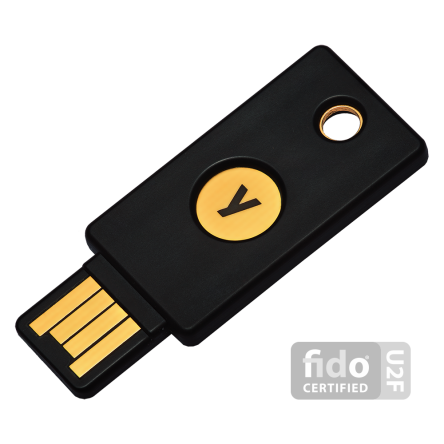
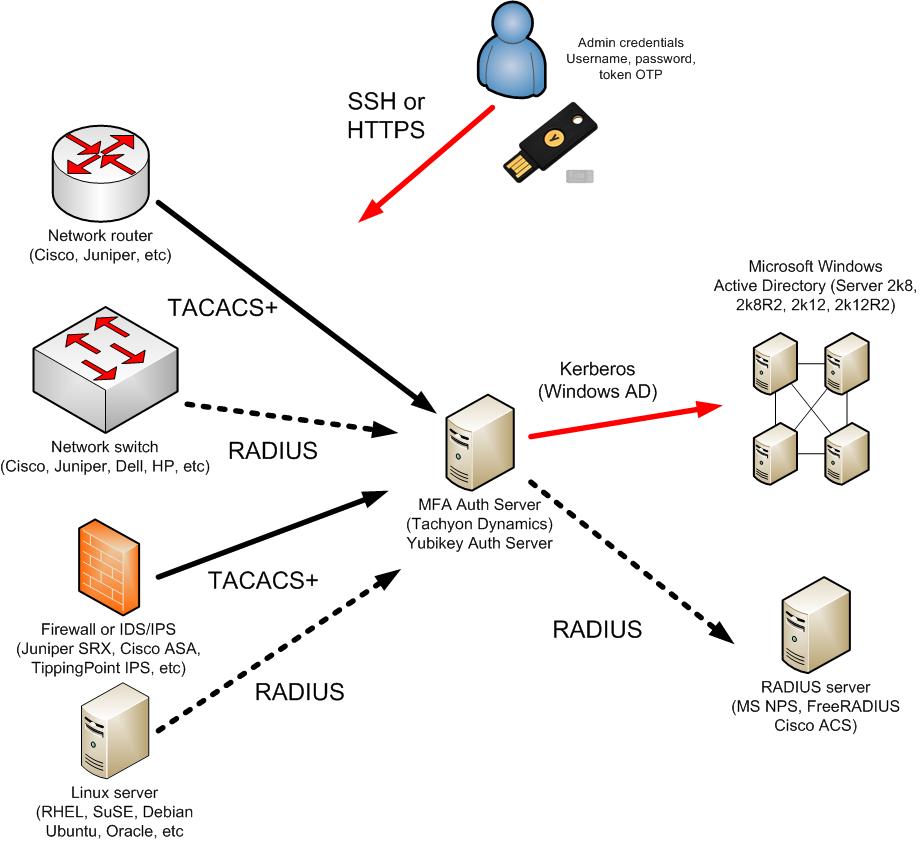
At Tachyon Dynamics, we have built, secured, tested, and hardened a robust, inexpensive, and highly flexible two-factor authentication solution introduced by Yubico called TDIYubiServ. Users authenticate using something they know (username/password) and something they have (hardware token called Yubikey). The Yubikey is a USB token-based One Time Password (OTP) device.
What Makes TDIYubiServ Different?
- Fully hardened in compliance with the DISA Red Hat Enterprise Linux STIG
- Yubikey is one of the few MFA services with DoD CIO approval as a technical alternative where DoD PKI cannot be implemented
- Streamlines MFA compliance for products pursuing a DISA Vendor STIG
- Secure virtualized implementation of Red Hat Enterprise Linux 9.x
Infrastructure Integration
TDIYubiServ contains numerous mechanisms to interface with your infrastructure devices and systems:
- FreeRADIUS server (Linux RADIUS server)
- Yubico-validation server
- tac_plus server (Linux TACACS+ server)
- Windows Active Directory / Kerberos client
- RADIUS client using pam_radius
- Local Linux accounts managed through the local PAM database
CMMC, DFAR and NIST 800-171 Compliance
TDIYubiServ, when properly implemented, can help your network achieve compliance with CMMC Level 1-3, DFAR mandates, NIST 800-171, and NIST 800-53 controls for protecting Controlled Unclassified Information (CUI). Controls addressed include:
- IA-1: Identification and Authentication Policy and Procedures
- IA-2: User Identification and Authentication
- IA-5: Authenticator Management
- IA-6: Authenticator Feedback
- IA-7: Cryptographic Module Authentication (when in FIPS 140-2 Mode)
- IA-8: Identification and Authentication (Non-Organizational Users)
- AC-2: Account Management
- AC-3: Access Enforcement
- AC-5: Separation of Duties
- AC-6: Least Privilege
- AC-7: Unsuccessful Login Attempts
- AC-14: Permitted Actions without Identification or Authentication
Need help with multifactor authentication implementation? Contact us today.